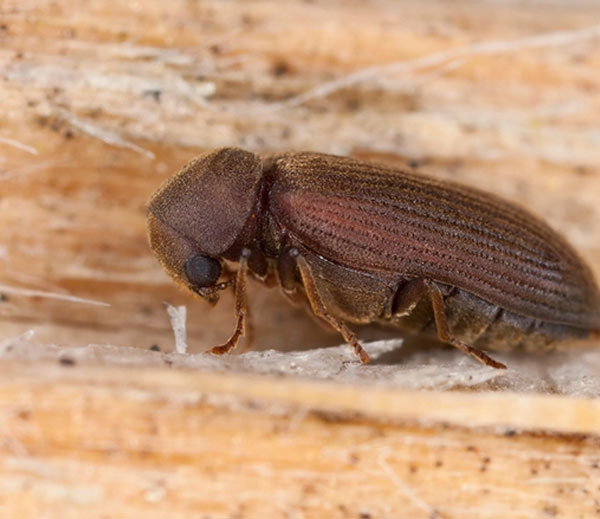
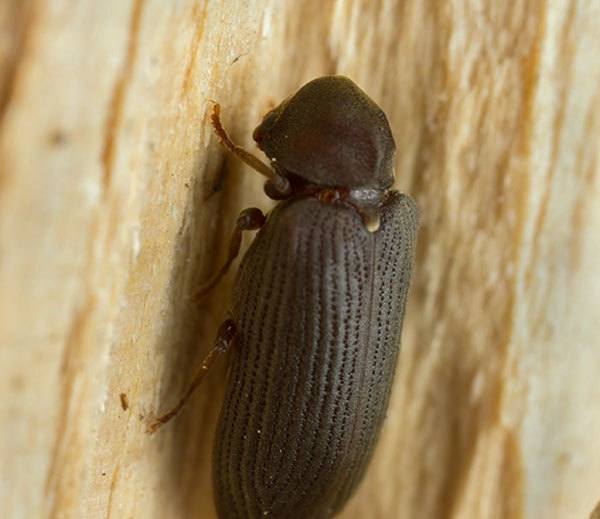
Anobium punctatum, commonly known as the common furniture beetle or woodworm, exists in several species in nature. It is a wood-boring beetle measuring 2.7–4.5 mm in length, with an elliptical brown body and a pronotum resembling a monk’s hood.
Anobium punctatum, commonly known as the woodworm, exists in several species in nature. It is a wood-boring beetle measuring 2.7–4.5 mm in length, with an elliptical brown body and a pronotum that resembles a monk’s hood.
This insect generally prefers to attack damp wood rather than dry wood, and the larva will target plywood and remain there longer than in any other type of timber. Damp floorboards, moist loft beams, and old furniture where the glossy finish has worn away are ideal areas where this species can be found. The female lays eggs on the wood, and it is the larvae that cause the damage.
Reproduction of the woodworm
The insect’s life cycle begins when it enters small natural cracks in the wood or the exposed ends of wooden elements. Once inside, the female woodworm lays eggs in existing cracks and holes created by previous infestations. This allows the eggs to remain safe and protected, enabling them to develop and eventually hatch.
After several weeks, the eggs hatch and become what we call larvae. The larvae are generally about 2 mm in size and begin tunneling through the wood, ultimately weakening the structure when combined with the activity of many other larvae doing the same. At this stage, the fine powder known as frass is produced, which is a waste product of the wood-boring larvae.
After two to five years, the larvae pupate. The larvae move toward the surface of the wood and create what is known as a pupal chamber. Here, the larvae expand the tunnel around them and develop into an adult beetle before eating through the final layer of wood, producing the round exit holes that are normally visible to the naked eye. Only at this stage of the life cycle can the woodworm be identified, by which time internal damage has already occurred.
From this point onward, the adult beetle causes very little additional damage to the wood. The round exit holes are the typical sign that identifies wood that has been infested. Females live between 10 and 14 days, while males live only 3–4 days. Once adult males emerge from the pupal chamber, their sole purpose is to mate with as many females as possible during their short lifespan.
Diet of the woodworm
This insect feeds on seasoned hardwood and softwood, particularly the sapwood of coniferous trees such as pine and poplar. It rarely attacks heartwood. Unlike Lyctidae and Bostrichidae, it can also digest cellulose.
Furthermore, unlike Lyctidae species, which prefer drier wood, Anobium punctatum favors wood with higher moisture content, including structural beams, timber frameworks, floors, and wooden objects.
Habitat: where it is found
These insects are mainly found in dry wood of hardwoods and softwoods and also show a preference for ivy. They are commonly found in carpentry items and household furniture, as well as in shops and warehouses throughout Europe.
They cause more damage to structural wood and carpentry products, such as those found in attics, rather than to furniture itself.