The German wasp can potentially have a destructive impact on a variety of ecosystem processes. The most evident effect is its predation on native arthropod species.
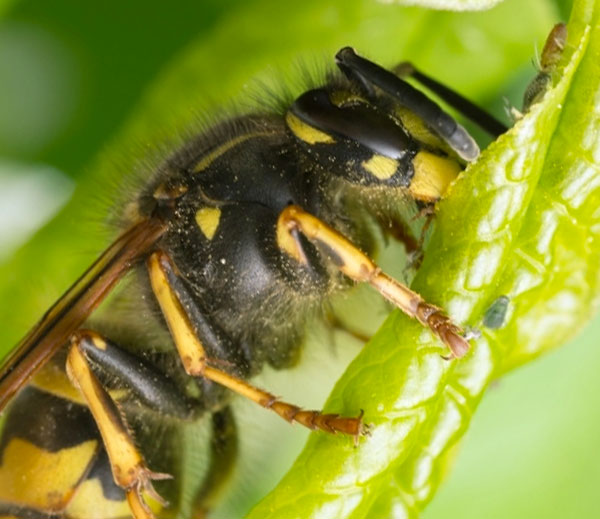
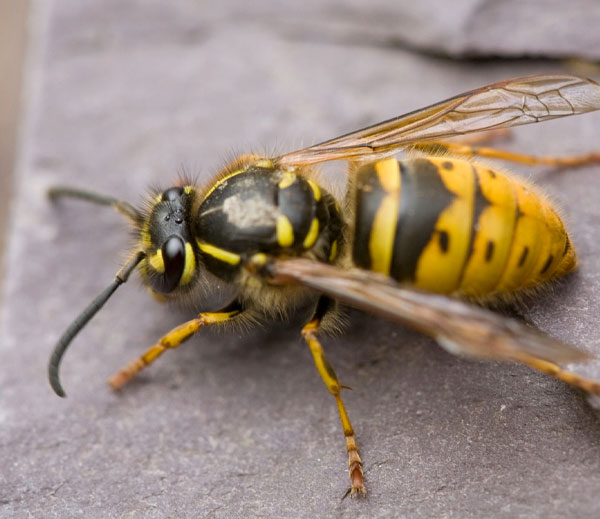
Adult German wasps, also known as yellowjackets, are 12–17 mm long (queens can reach up to 20 mm). They have a dark brown to black pedunculated abdomen with bright yellow stripes.
They display strong black markings, including an arrow-shaped mark in the center of the abdomen and black spots on both sides. The wings are long and translucent, the legs are yellow, and the antennae are black.
The antennae are divided into 12 or 13 segments depending on sex (males have 13), and the abdomen is divided into 6 or 7 segments (males have 7). Females are equipped with an ovipositor.
Reproduction of the wasp
Queens begin building nests in spring. The first group of adult worker wasps takes over the task of expanding the nest and feeding the larvae, allowing the queen to continue laying eggs.
The nest continues to grow throughout the summer, until late summer and early autumn, when several hundred queens and males are produced. These usually leave the nest in autumn and participate in mating flights.
Fertilized queens seek well-insulated locations to overwinter, a characteristic that can influence wasp dispersion. Occasionally, queens and some workers remain in the nest during winter, allowing the nest to reach extremely large sizes the following summer. Males, however, die.
Habitat: where they are found
Vespula germanica usually nests underground in holes dug into the soil. Alternatively, it may build nests in cracks in tree trunks, stacked materials, compost, or hedges.
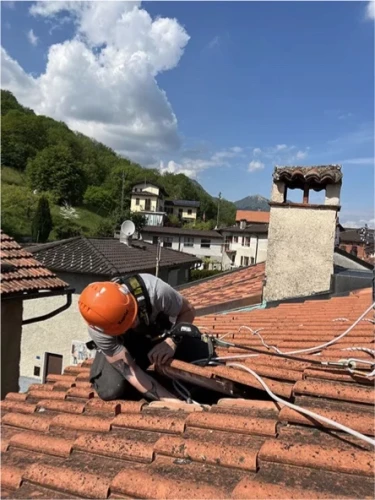
In urban areas, nesting options increase significantly, and wasps often nest inside walls, attics, or other building spaces.
In urban environments, about 30% of nests are found in buildings, whereas in rural or forested areas up to 100% of nests are located in the ground.
Vespula germanica can invade both disturbed environments and natural ecosystems. Climate is a key factor in invasion success. This species is sensitive to prolonged extreme temperatures and is therefore limited to temperate regions. Heavy rainfall and low temperatures can suppress populations, as underground nests are vulnerable to flooding.
Diet of the German wasp
Vespula exploits available fruit and floral resources during summer, collecting flower nectar and feeding on fermented fruit pulp. Workers may also collect secretions from honeydew-producing insects.
The species hunts and consumes arthropods, including flies, mosquitoes, and caterpillars. Wasp larvae require a protein-rich diet consisting mainly of insects and spiders.