Silverfish is the common name for Lepisma saccharina, a pest found worldwide.
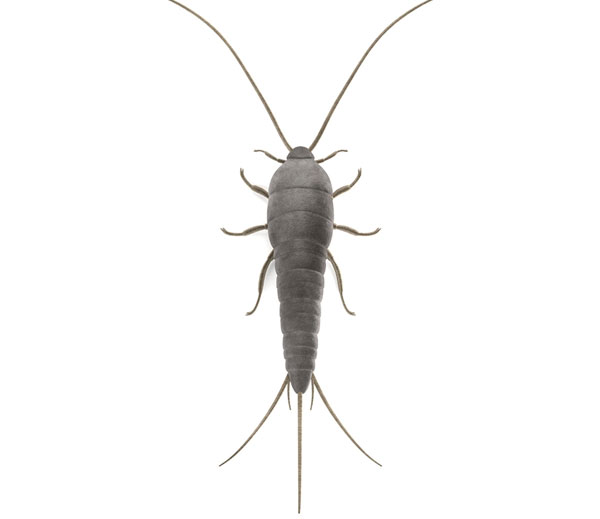
Silverfish is the common name for Lepisma saccharina, a pest found in almost all parts of the world. Specimens are silver or pearl gray in color, with a body covered in tiny, shiny scales that often resemble fish scales.
Silverfish are wingless and typically measure 8–9 mm in length and have two long antennae. The body is broad at the head and tapers toward the rear, where three long bristle-like appendages are present. One appendage extends straight backward from the end of the body, while the other two curve left and right at nearly a ninety-degree angle.
If lost, silverfish can regenerate terminal filaments and antennae within two to four weeks. Silverfish are nocturnal and are rarely seen during the day unless disturbed from their resting places.
Silverfish reproduction
Silverfish belong to one of the most primitive and least evolved insect orders and have an ametabolous life cycle. In ametabolous insects, adults lay eggs, and the immature insects that hatch resemble miniature versions of the adults.
Immature ametabolous insects molt a certain number of times, depending on the species, until they reach adulthood and become sexually mature. Adults may continue to molt throughout their entire lives.
Once adulthood is reached, silverfish do not have a fixed number of molts: between 25 and 66 molts have been recorded during a lifetime. Under optimal conditions, silverfish may continue molting for up to four years.
Habitat: where they are found
Silverfish typically inhabit environments with high humidity and temperatures between 22–27°C, although they can survive across a wide range of temperatures.
They are usually found in hidden, climate-controlled areas such as bathrooms, attics, and basements. Silverfish can also become serious pests in commercial buildings with strict climate control, such as museums, where they may cause significant damage.
When discovered or disturbed, silverfish quickly flee to hide, making them difficult to capture.
Silverfish diet
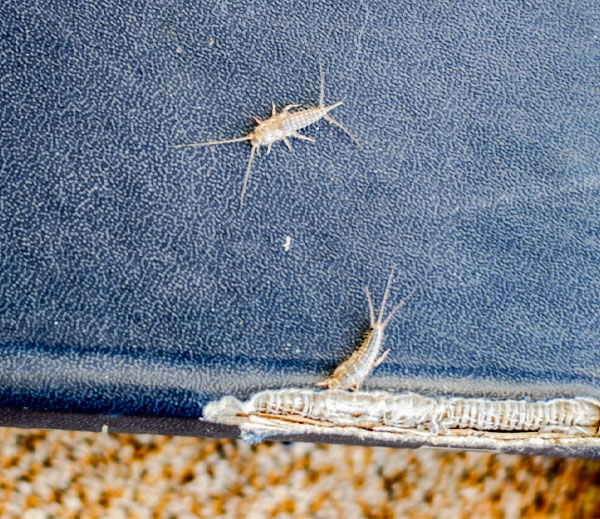
Silverfish prefer starchy materials—such as paper and wood—as their primary food source. They show a particular preference for coated paper, which contains a starch-rich layer that gives the paper a smooth and glossy finish.
They also feed on sugars, cellulose, linen, silk, cotton, vegetables, cereals, dried meat, dead silverfish, and the glue used in wallpaper, curtains, carpets, book bindings, and certain high-end furniture coverings.