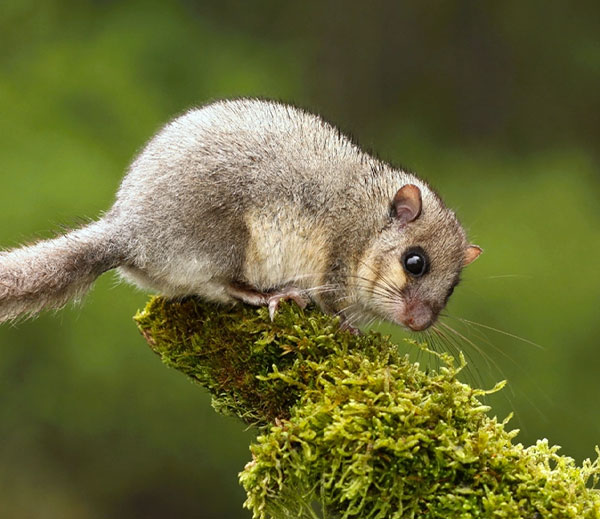
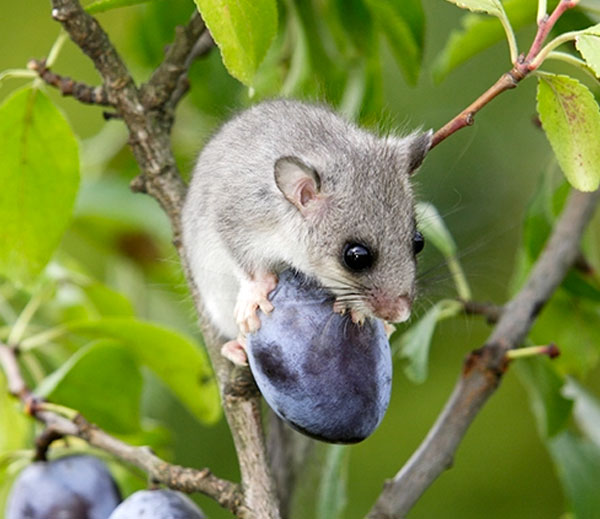
These animals have adapted to the presence of humans and are generally considered pests due to the fire risk caused by gnawed electrical cables and the accumulation of their droppings.
General characteristics
Glis glis is a dormouse species commonly known as the edible dormouse. Its range mainly overlaps deciduous and mixed forest areas in Europe and southwestern Asia. Its primary habitat consists of deciduous and mixed woodlands, and the species is strictly nocturnal.
The edible dormouse is unusual among small rodents due to its long lifespan (on average about 9 years), prolonged hibernation (up to 7 months), and periodic reproductive failure.
Reproduction of dormice
The breeding season starts in late June and ends in mid-August, but neither males nor females reproduce every year. Food availability strongly influences reproduction, as the reproductive cycle is closely linked to the availability of energy-rich seeds.
Females may produce additional litters when amino acid–rich foods such as inflorescences, unripe seeds and insect larvae are available. Abundant energy-rich seeds allow newborn dormice to accumulate body fat in preparation for their first hibernation.
Gestation lasts between 20 and 31 days, resulting in litters of up to 11 young, although four to five is most common.
Habitat: where they are found
Dormice prefer deciduous forests dominated by oak and beech, rocky outcrops and caves, but can also be found in scrubland, orchards and urban areas. They are nocturnal and spend the day in bird nests, hollow trees or similar shelters.
Diet of the dormouse
Dormice are mainly herbivorous and feed on berries, apples and nuts. However, they also consume bark, leaves, flowers, invertebrates and even eggs. Beech trees are an important food source due to their high energy and protein content.