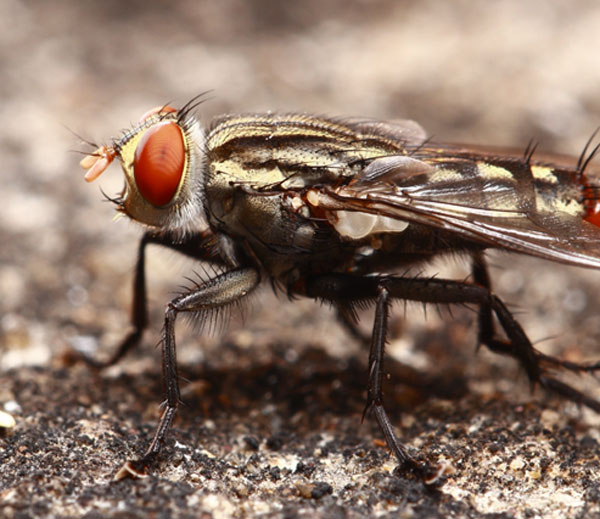
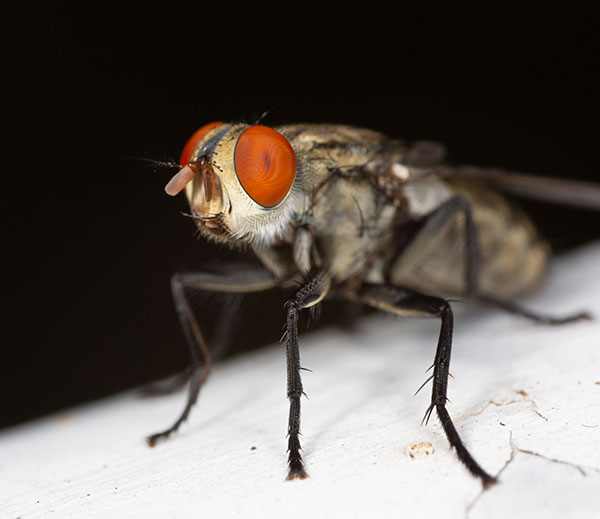
Flies commonly develop in large numbers in poultry manure, underneath caged chickens, which represents a problem that must be kept under control. Although this fly species does not bite, controlling it is vital for human health and well-being in many parts of the world.
General characteristics
The house fly, technically known as Musca domestica Linnaeus, is a well-known cosmopolitan pest found both on farms and in homes. This species is associated with most human activities. It is the most common species found in pig and poultry farms, stables, and livestock facilities. In addition to being a nuisance, house flies can carry disease-causing organisms.
Fly reproduction
The house fly undergoes complete metamorphosis with distinct stages: egg, larva, pupa, and adult. The house fly overwinters in the larval or pupal stage under manure piles or in other protected locations. Warm summer conditions are generally optimal for house fly development, allowing it to complete its life cycle in as little as seven to ten days.
However, under less favorable conditions, the life cycle may take up to two months. In temperate regions, 10 to 12 generations can occur each year, while in subtropical and tropical regions more than 20 generations may occur.
Habitat: where they are found
This common fly originated in the steppes of Central Asia but is now found on all inhabited continents and can adapt to all climates, from tropical to temperate, and to a wide range of environments from rural to urban. It is commonly associated with animal feces but also feeds on garbage, which is why it is present almost everywhere people live.
House fly feeding habits
In the larval stage, house flies feed on plant matter, dead animal parts, live flesh, or may become parasites of larger animals. In the adult stage, once wings have developed, they prefer sugary plant liquids or blood.