Fruit flies attack and damage most soft-skinned fruits and some produce with harder skins.
General characteristics
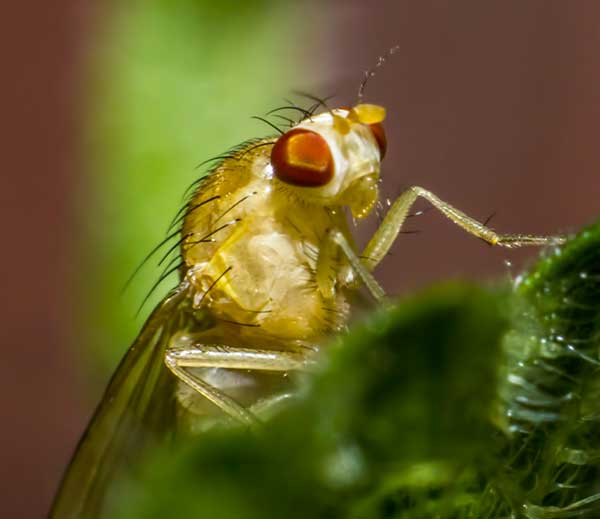
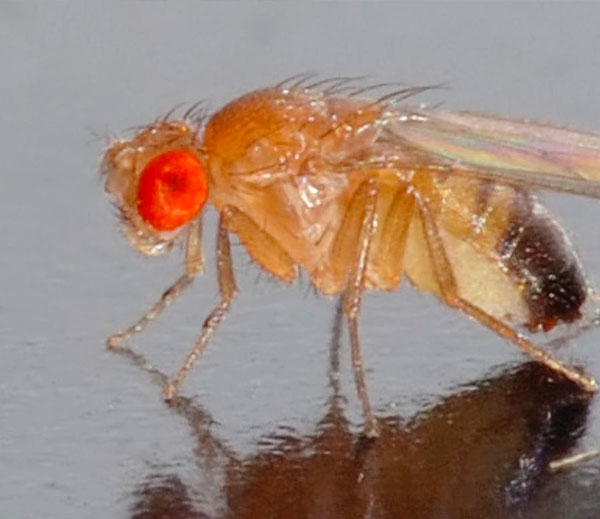
The adult Drosophila melanogaster (fruit fly) is yellow-brown (light brown) in color and measures approximately 3 mm in length and 2 mm in width. It has a rounded head with large red compound eyes, three smaller simple eyes, and short antennae.
The female is slightly larger than the male. Black stripes are present on the posterior surface of the abdomen and can be used to determine the sex of the individual. Males have a greater concentration of black coloration at the tip of the abdomen.
Like other flies, fruit flies have a single pair of wings that grow from the central segment of the thorax. The larvae are very small, white, and lack legs and a defined head.
Fruit fly reproduction
The reproduction of this species is very rapid. A single pair of flies can produce hundreds of offspring within a couple of weeks. Development is highly dependent on temperature, and offspring reach sexual maturity in just a few days.
Male flies have sex combs on their front legs, which they use to grasp the female’s abdomen and genitalia and to spread their wings prior to mating.
Fruit fly eggs are laid on fruit and hatch into larvae that immediately begin consuming the fruit on which they were deposited. The entire life cycle lasts about ten days at optimal temperatures.
The flies complete embryonic development as eggs before transforming into first-stage larvae. The larvae feed, grow, and molt through three stages before stopping movement. A transformation then occurs during the pupal stage, after which the adult fly emerges.
Habitat: where they are found
Drosophila melanogaster is commonly found inside and around human settlements, from large cities to remote agricultural areas. This species infests kitchens, where ripe fruit, plant material in trash bins, and garden compost are easily available.
It reproduces successfully in bananas. Other host plants used as breeding sites include mangoes, papayas, and apples. Several other fruit tree species in Africa have been shown to host D. melanogaster larvae.
This insect is widespread in tropical regions of the Old World (Africa, Asia, and Europe) and is found in most temperate regions worldwide. During colder winter months, fruit flies seek shelter due to their inability to withstand low temperatures.
Fruit fly feeding habits
Fruit flies are attracted to yeasts produced during the early decomposition of plant material. Sap, overripe produce, and fungi are also common food sources.
This insect punctures the skin of ripe fruits and vegetables to lay eggs and feed. As their name suggests, fruit flies primarily feed on fruit and other sugary substances and are also attracted to fermenting sugars in alcoholic beverages.
They are particularly fond of bananas and tend to infest homes where fruit is left on countertops or other exposed surfaces.