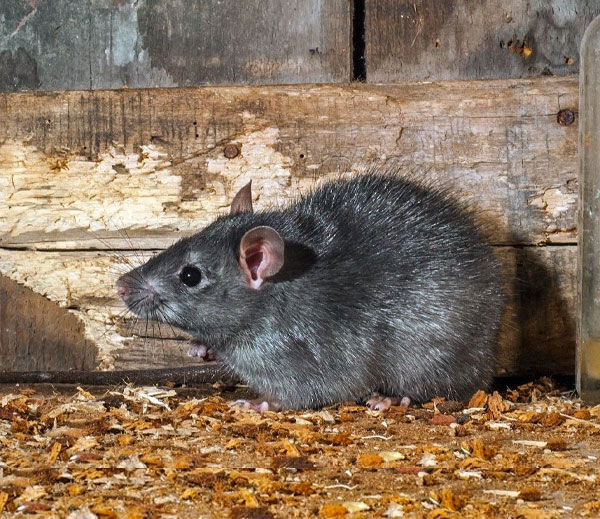
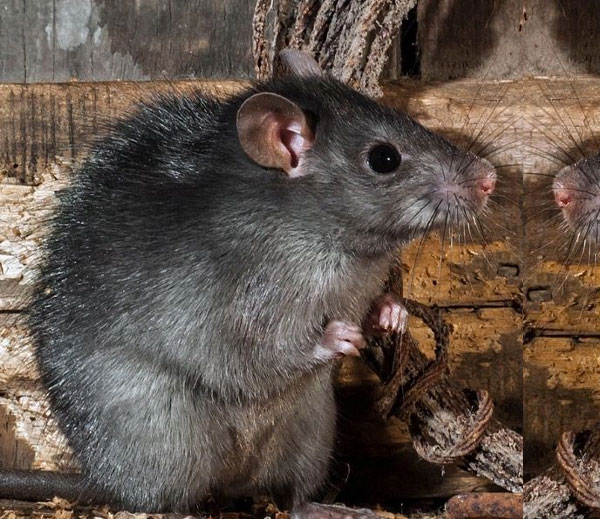
The black rat is more common in coastal areas because it is a rodent that thrives in human-inhabited environments and on large ships.
Rattus rattus, better known as the roof rat, is found on all continents of the Earth. Although the species is believed to have originated in India and possibly other Indo-Malayan countries, it was introduced through human overseas travel to all continents. It is more common in coastal areas because it is a rodent that thrives in human-inhabited environments and on large ships.
Rattus rattus is a medium-sized rodent with relatively large ears and a tail that is almost always longer than the body. An individual weighs between 70 and 300 grams and has a head-and-body length ranging from 16 to 22 cm, with a tail length of 19 cm or more. Males are longer and heavier than females.
Many members of the species are black with a lighter-colored belly. The species is often divided into subspecies based on color patterns that rely on different combinations of black, white, and gray. The skull and nasal bones are relatively narrow.
Roof rat reproduction
Social groups of Rattus rattus are often made up of multiple males and multiple females. One male is dominant, and a linear male hierarchy may form. Two to three females are often dominant over all other members of the group except the dominant male.
Females are generally more aggressive than males. The species is polygamous and, in general, the dominant male is the most successful breeder. Territories and mates are defended through aggressive behavior. If environmental conditions allow, successful breeding can occur year-round.
Peak breeding seasons are summer and autumn. Females can produce up to 5 litters in a year. The gestation period ranges from 21 to 29 days, and young rats are able to reproduce within 3–5 months of birth.
Newborns are altricial, like most rodents, and their eyes do not open before 15 days of age. The young remain hairless for much of their nursing period. Weaning and independence from the mother occur at about 3–4 weeks of age.
Diet of the black rat
This animal generally feeds on fruit, grains, wheat, cereals, shoots, bark, and other vegetation. It is omnivorous, however, and if necessary it eats insects or other invertebrates, as well as eggs, small birds, and carrion. It consumes about 15 g of food per day and 15 ml of water per day.
Habitat: where they are found
Rattus rattus is found in coastal areas because it spreads through maritime navigation. It is generally found in any area that can support its predominantly vegetarian diet. Because the black rat is an agile climber, it often lives in high places, such as the upper floors of buildings or in trees in wooded areas.
Although it can be found near water, this species rarely swims and, unlike its close relatives, it rarely makes its home in sewers or aquatic areas. Although it was previously common in cities and farms of temperate regions, it has largely been displaced by the more aggressive Norway rat.