The larder beetle causes the greatest damage during the larval stage. In addition to contaminating food, it can bore tunnels through wood, mortar, and soft metals.
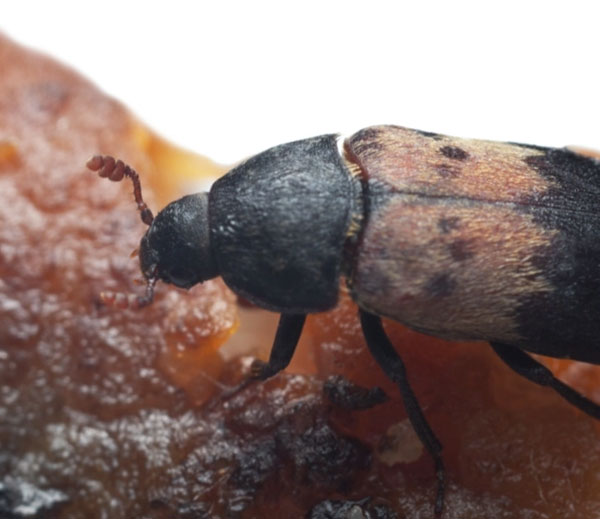
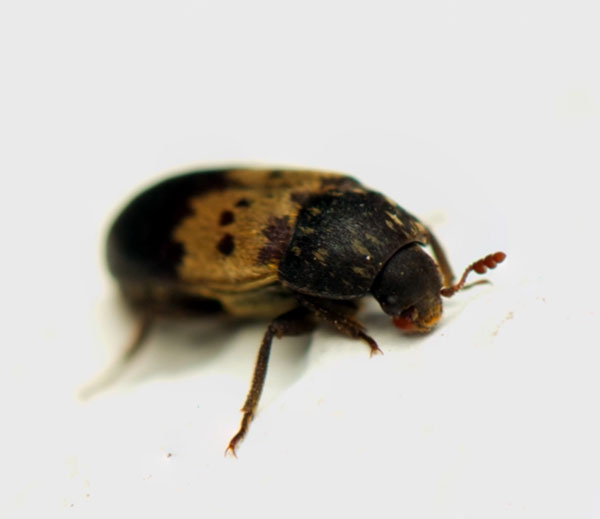
Dermestes lardarius, commonly known as the larder beetle, is a black beetle approximately 1/3 inch long, with a broad light-brown band mottled with black across the front portion of the wing covers.
The larvae are reddish-brown and densely covered with both short and long hairs. They have two curved spines on the upper part of the tail.
Reproduction of the larder beetle
These insects often overwinter in bark crevices or other sheltered locations. In early spring, adult beetles are attracted to dead insects and may enter buildings to lay their eggs. During the summer months, females lay more than 100 eggs, with an incubation period of less than 12 days.
The larvae, which prefer spoiled meat, feed continuously until the penultimate molt. Males may molt up to five times and females up to six times. When ready to pupate, larvae bore into nearby materials, preferably close to their food source.
The pupal stage lasts between 3 and 7 days, depending on temperature and humidity conditions. Under optimal conditions, a full generation can be completed in 40–50 days.
Habitat: where it is found
This species is commonly found in museums, livestock facilities, residential buildings, leather-processing companies, and industries involved in the production of pet food. In natural environments, it prefers bird nests and animal carcasses, such as dead birds and rodents.
Diet of the larder beetle
Both adults and larvae feed on high-protein food sources, including cured and spoiled meat, dried fish, pet food, dead insects such as cluster flies and boxelder bugs, fur, feathers, leather, cheese, dead rodents and birds inside chimneys or wall cavities, and even poisoned rodent bait.