This household pest feeds mainly on stored food products and is considered the most important pest of stored products commonly found in homes and grocery stores.
Characteristics of food moths
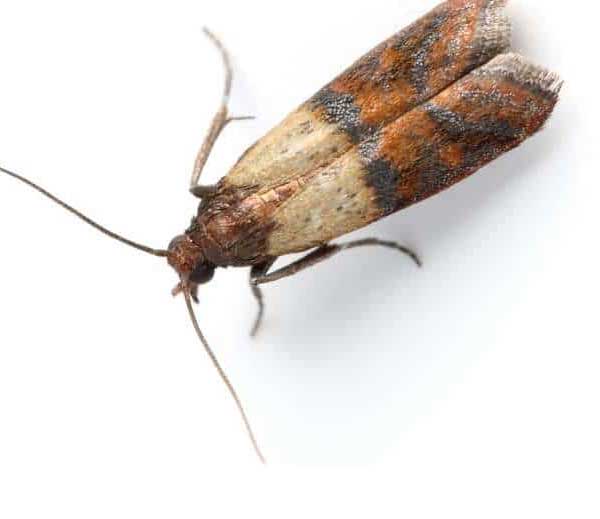
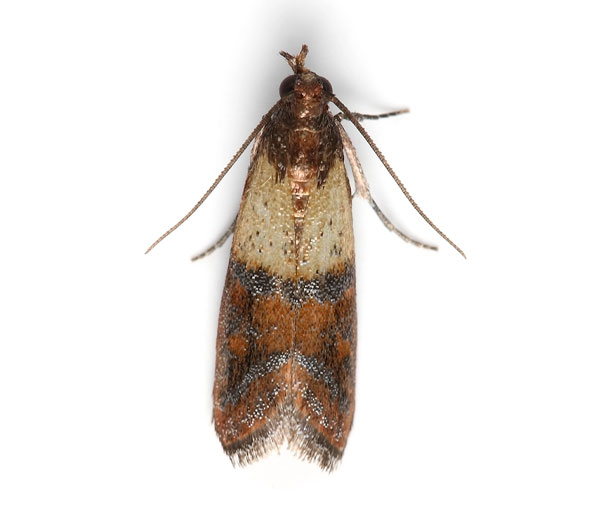
Plodia interpunctella, also known as the Indian meal moth (food moth), is a very common insect worldwide. The eggs appear whitish-gray and measure between 0.3 and 0.5 mm in length. Eggs are laid singly or in groups, usually directly on the larval food source.
There are five to seven larval stages. The larvae are usually dirty white in color, but may appear pink, brown, or nearly greenish depending on the food source. Mature larvae are about 1.3 cm long and have five pairs of well-developed legs that allow them to travel considerable distances in order to pupate.
The larvae pupate either within a silk cocoon or unprotected. Pupae measure between 6 and 11 mm and are light brown in color. Transformation occurs away from the infested material. In fact, late-stage larvae may travel far enough to be mistaken for clothing pests. Within pantries, small larvae often crawl onto other shelves before pupating, which can mislead people trying to locate the source of the infestation.
Reproduction of food moths
A life cycle can be completed in 27–305 days. A single female can lay up to 400 eggs after mating. Mating and egg-laying occur about three days after adult emergence.
Eggs may be laid singly or in clusters and are usually deposited directly on the larval food source. Eggs hatch in seven to eight days at 20°C and in three to four days at 30°C.
After hatching, larvae begin dispersing and can establish themselves in a food source within a few hours. Larvae may complete development in six to eight weeks at temperatures between 18 and 35°C. The pupal stage may last 15–20 days at 20°C and seven to eight days at 30°C.
Habitat: where they are found
This insect can be found in a wide range of climates in stored products and food storage facilities worldwide. It is very common in Florida, where it also survives successfully outdoors.
Diet of food moths
This household pest feeds mainly on stored food products and is considered the most important pest of stored products commonly found in homes and grocery stores. The larvae are omnivorous and may be found in grain products, seeds, dried fruit, dog and cat food, and spices.