Tineola bisselliella causes damage to clothing, and the larval stage is the damaging one, feeding on wool garments, rugs, carpets, upholstered furniture, furs, stored wool items, animal bristles in brushes, etc.
The clothes moth, known as Tineola bisselliella, is a small moth that attacks clothing and textiles in general. It tends to hide when disturbed, so you may not even realize you have an infestation until the moths have already damaged fabric, furs, or feathered items. A careful inspection of the items will reveal silken webs spun by the larvae.
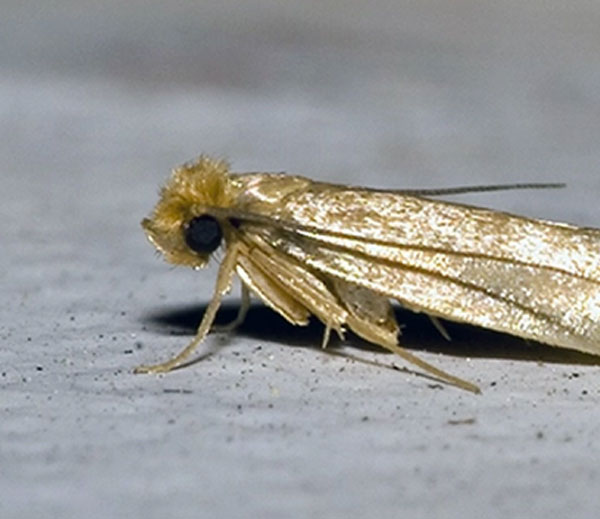
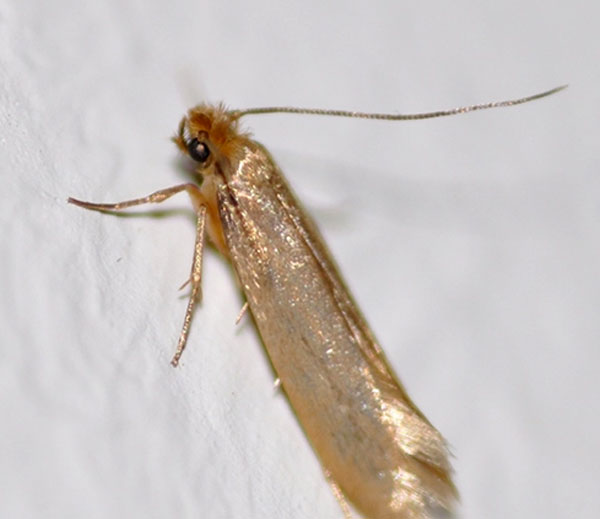
The adult has reddish-golden hairs on the top of its head. A row of golden hairs fringes its wings, which have a wingspan of about 12 mm. Because these moths are not attracted to light, they are usually found close to infested items, for example in a dark area of a closet.
At rest, clothes moths are only about 6–7 mm long, whereas most food-infesting moths are about twice that length. Clothes moths usually fly only in the immediate vicinity of the home where the infestation occurs, and their flight pattern is distinctive: they tend to flutter rather than fly in a direct, steady way like food moths do.
The larvae always carry a silk case with them while feeding. They never leave this silk case, but enlarge it as they grow. The droppings of this species may contain dyes from the textile fibers they have eaten.
Reproduction of the clothes moth
Females lay, on average, 40 to 50 eggs over a period of 2–3 weeks and die once egg-laying is complete. Males outlive the females and continue to mate for the rest of their lives. An adhesive secretion attaches the eggs to fabric threads. In warm seasons, the eggs hatch in 4–10 days.
The larvae molt 5 to 45 times, depending on indoor temperature and the type of food available. The larval period lasts from 35 days up to two and a half years. The larvae are shiny white and the head capsules are dark-colored.
As they feed, they spin silk, creating a temporary silk feeding tube or tunnel, as well as a permanent silk case that the larvae carry with them as they move. When clothes moth larvae are ready to pupate, they leave their food source to find cracks and crevices. In clothes moths, pupation occurs inside a silk cocoon, usually on the fabric.
The pupal stage lasts 8–10 days in summer and 3–4 weeks in winter. Heated buildings allow clothes moths to continue developing during winter months. Generally, the development time from egg to egg is four to six months, and there are usually two generations per year.
Habitat: where they are found
Their preferred habitats include homes, hotels, processing facilities, museums, and warehouses—places where there are closets, carpets, upholstered furniture, and textiles that can be used for reproduction.
Diet of textile moths
Tineola bisselliella damages clothing, and the larval stage is the damaging one, feeding on wool garments, rugs, carpets, upholstered furniture, furs, stored wool items, animal bristles in brushes, wool felt in pianos, and fish meal in fish food. They may also feed on synthetic fabrics or cotton blends if those fabrics also contain wool.