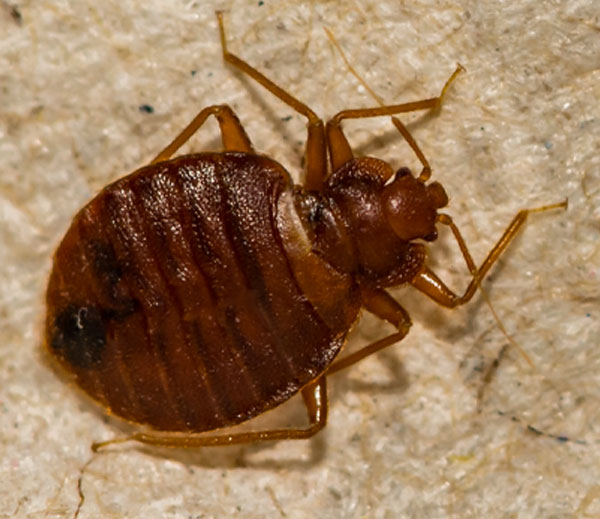
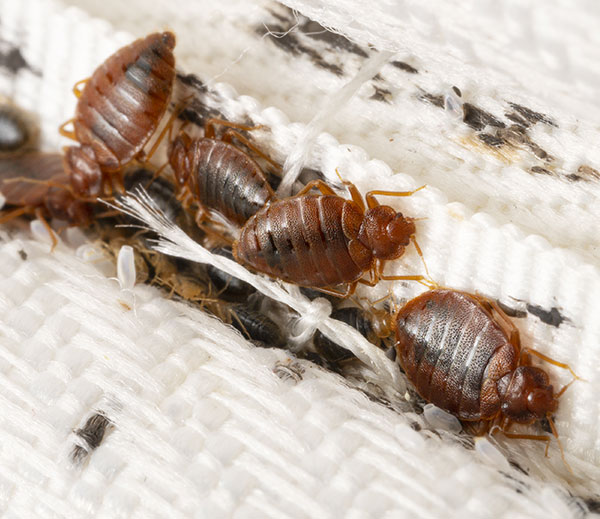
The Cimex lectularius, commonly known as the bed bug, is a small, oval, brown insect that feeds on the blood of humans or animals. Adult bed bugs have flat bodies about the size of an apple seed. After feeding, however, their bodies swell and become reddish in color.
Bed bugs do not fly, but they can move quickly across floors, walls, and ceilings. Female bed bugs can lay hundreds of eggs during their lifetime, each about the size of a grain of dust.
Immature bed bugs, called nymphs, shed their skin five times before reaching maturity and require a blood meal before each molt. Under favorable conditions, bed bugs can fully develop in as little as one month and produce three or more generations per year.
Reproduction of bed bugs
The life of a bed bug begins with an egg, which is grain-like and milky white in color. Female bed bugs lay one to five eggs per day and can lay up to 500 eggs during their lifetime. Eggs are laid singly or in clusters and are placed in narrow cracks and crevices. Each egg is about 1 mm long, roughly the size of two grains of salt. Within two weeks, the eggs hatch and immature bed bugs begin feeding immediately.
These young bed bugs, or nymphs, go through five molts before reaching maturity. Although nymphs resemble adults, they are smaller and not yet sexually mature. Young nymphs are yellowish-white, while older nymphs and adults are reddish-brown. Each nymph requires a blood meal to complete a molt. At room temperature, nymphs can develop into adults within five weeks.
Once mature, adult bed bugs typically feed weekly. The lifespan of a bed bug generally ranges from four to six months, although some individuals can survive up to a year under cool conditions without feeding.
Habitat: where they are found
The ideal habitat for bed bugs can potentially be found in any dwelling. Infestations occur in a wide range of environments, including single-family homes, multi-unit buildings, apartments, hotels, hospitals, schools and university campuses, office buildings, cinemas, and even public transportation.
Mid- to high-end clothing stores can also be affected. Bed bugs hide in clothing, blankets, sheets, furniture, wallpaper, and plastic items. When they infest an object, they often leave fecal stains that indicate their presence.
Feeding behavior of bed bugs
Bed bugs rely on blood meals for hydration and nutrition. They typically feed every 3–7 days but can survive for several months without a blood meal. They are attracted by carbon dioxide from human breathing, body heat, dried human sweat, sebaceous gland material, and ear secretions.