Flesh flies are not a major problem as disease carriers or nuisances and represent a minor threat to human well-being or livestock.
General characteristics
Depending on the species, the adult size of Sarcophaga carnaria – commonly known as the flesh fly – ranges from 10 to 22 mm once growth is fully completed.
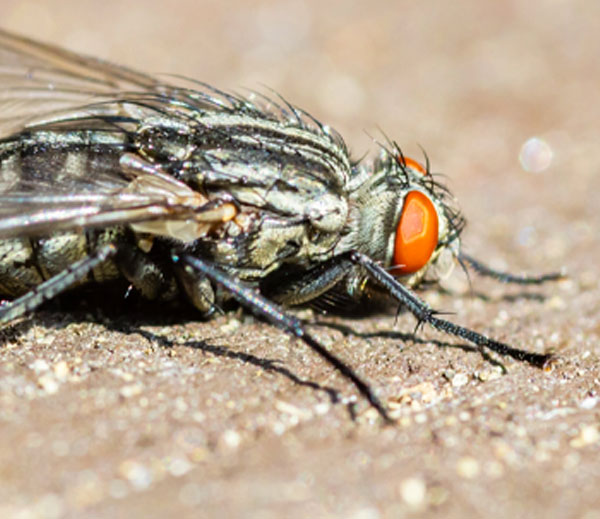
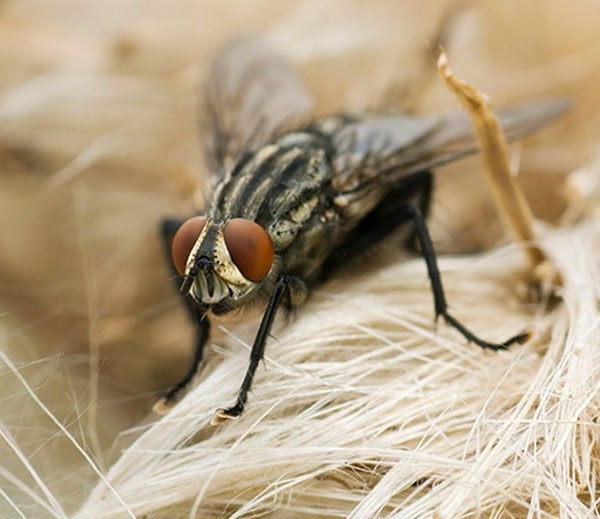
Flesh flies typically have gray bodies with three black stripes on the thorax. The abdomen shows a light and dark gray checkerboard pattern and is often reddish at the tip. Although some species may be smaller than house flies, most flesh flies measure between 10 and 13 mm in length.
The larvae vary in color from white to yellowish and have pointed heads. Depending on the species, they reach a length of 10 to 22 mm at the final stage of development.
Reproduction: grey flesh fly
The life cycle of flesh flies varies depending on species and location. They overwinter as pupae, mainly in temperate climates. Flesh flies are rarely very numerous and typically emerge in spring to mate.
Eggs are laid only under very unusual circumstances. Normally, eggs hatch inside the adult female’s body. Females of most species deposit between 20 and 40 larvae directly onto the host or substrate. A single female can produce up to 325 larvae.
The larvae feed for 3 to 4 days and develop through three stages. Shortly afterward, mature larvae enter the pupal stage. Adult flies emerge within 10–14 days and the life cycle repeats. Several generations are produced each year.
Habitat: where they are found
Flesh flies are found in both urban and rural communities but are fortunately relatively rare in homes or restaurants. They breed in feces, decaying plant matter, or animal flesh.
Grey fly feeding habits
Adult flesh flies do not bite and feed on a wide range of liquid substances. Most larvae infest wounds, carcasses, or feces.
Larvae of some flesh fly species are beneficial as they prey on eggs, nymphs, or larvae of more harmful insects. Larvae of lesser house flies, blow fly larvae, and grasshopper nymphs are common prey.