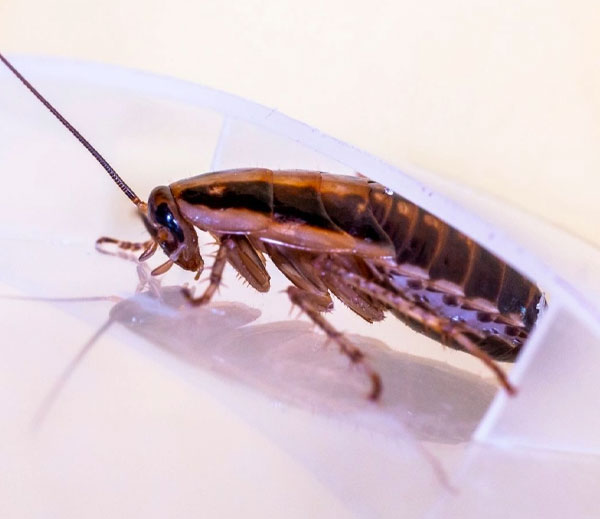
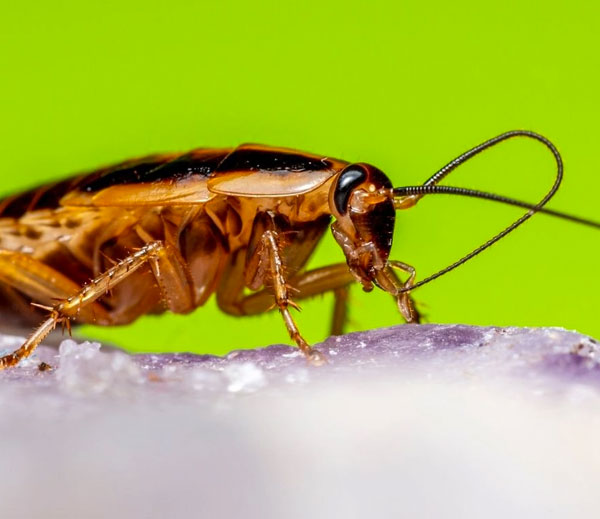
German cockroaches are more than just a nuisance.
Reproduction of the German cockroach
Blattella germanica has panoistic ovaries, meaning the ovarian follicle consists only of a germ cell (the oocyte) surrounded by a single layer of follicular cells (the most basal ovary type in insects).
It reproduces continuously: females lay up to five oothecae during their lifetime. The egg case is about 8 mm long, 3 mm high, and 2 mm wide, brown and purse-shaped, and typically contains 30–40 eggs.
The eggs are carried by the female in an egg case (ootheca) until shortly before hatching. The egg case protrudes from the rear of the adult female, and nymphs often hatch while the female is still carrying it.
The species has a short life cycle and, under optimal conditions, a single female could theoretically produce more than 10 million females within a year and more than 10 billion females in 11–12 years. On average, males live up to 130 days and females up to 150 days.
Habitat: where they are found
The German cockroach lives in temperate or tropical environments. It prefers warm, humid conditions and is strictly terrestrial. It occupies a range of habitats, from very humid areas such as rainforests and scrub forests to somewhat drier areas such as taiga and chaparral.
It also occurs in wild environments such as forests and caves, as well as in urban, suburban, and rural settings. Cold is one of the main limiting factors for this species. On average, it is found at around 1,200 meters, and due to low temperatures and dryness it typically does not occur above 2,000 meters.
Diet of the German cockroach
These insects eat almost anything, but they prefer certain foods such as rice, potatoes, and cereals. They also feed on toothpaste, soap, pet food, book bindings, and glues.