These spiders can be found in various structures at any time of the year.
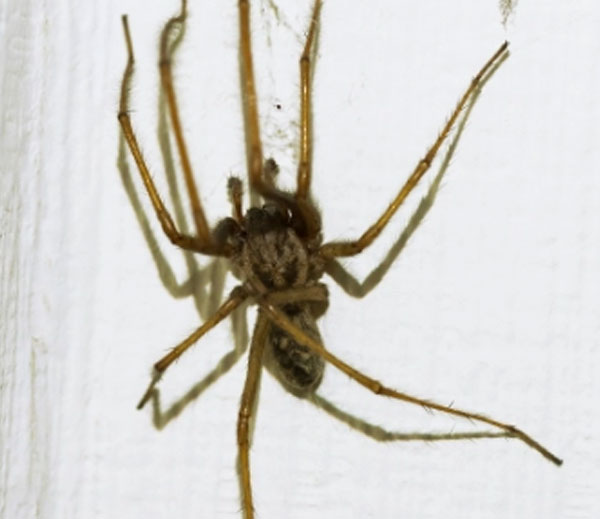
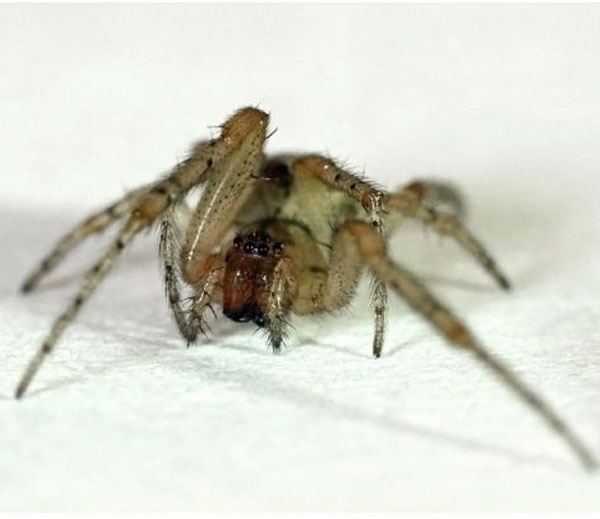
Tegenaria domestica is the common house spider. Females range in length from 7.5 to 11.5 millimeters, while males measure between 6 and 9 millimeters.
The cephalothorax is reddish-brown with a covering of pale yellow hairs and two light gray longitudinal lines. The abdomen ranges from pinkish flesh tones to pale colors, with a pattern of gray to black spots.
The legs are spiny, with very light gray banding at the distal end of the femurs.
The webs are similar to those built by grass spiders but are generally smaller in diameter, with the retreat located within the sheet web rather than on the side.
These spiders can live up to seven years and produce up to nine egg sacs. The sacs are placed in various locations on the web, often suspended by silk threads.
Males are frequently found on the web together with the female during the mating season, which occurs from May to July. These spiders can be found in various structures throughout the year.
Spider reproduction
In late autumn, the female lays eggs. Each egg sac contains up to 50 eggs, which are protected by the mother until they are ready to hatch.
Newly hatched spiders undergo a simple metamorphosis. They emerge from the eggs resembling miniature versions of the adults and continue to molt as they grow.
Habitat: where they are found
This species of house spider is commonly found in homes, particularly in sheds and barns, around and inside door cracks, as well as in crevices of rocky walls and under rocks and boards, especially in debris-rich environments.
Diet of the house spider
These spiders are not active hunters; instead, they prefer to “sit and wait” until unsuspecting prey is intercepted by the web.
They often place interception threads above their primary web to cause flying insects to fall into the sheet web below.
In most cases, the web is not sticky. Instead, the spider relies on lightning-fast speed to rush from its funnel retreat to capture prey.
Spiders bite and paralyze their prey before consuming it. They are generally active at night but will capture prey whenever the web is in place.