The common ant is found across much of Europe, including the Channel Islands, and has only recently been recorded in mainland Great Britain.
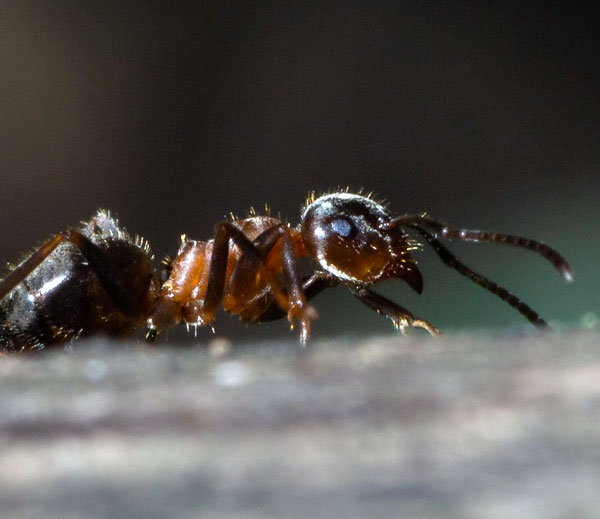
The common ant looks similar to the common black ant L. niger (Linnaeus), except for its distinctive orange-red thorax that contrasts with the dark-brown head and abdomen. Workers reach a length of 3–5.5 mm, females 7–10 mm, and males 7–14.5 mm. In workers and females, the thorax is reddish or reddish-brown, while the head and abdomen are brown. Males are entirely brown.
The queen can live up to 30 years, while workers typically live up to 3 years. This species is omnivorous. Colonies are monogynous (one queen per colony). They are not highly aggressive, but they will attack a potential predator or another colony to expand their foraging territory.
Reproduction of common ants
Mating takes place between April and July. While independent colony founding is the usual method, colonies can also be established through pleometrosis, a process in which multiple queens cooperate to start a colony. Eventually, however, the workers will kill or drive away all queens except the dominant one.
Habitat: where they are found
This species occurs in the western Palearctic, including Europe, the Caucasus, and Asia Minor. It requires warm, open, sun-exposed areas. Its natural habitat therefore includes warm, sparsely vegetated rocky sites with temperatures ranging from 20 to 28°C. Nests are built under stones, among rocks, or within bricks.
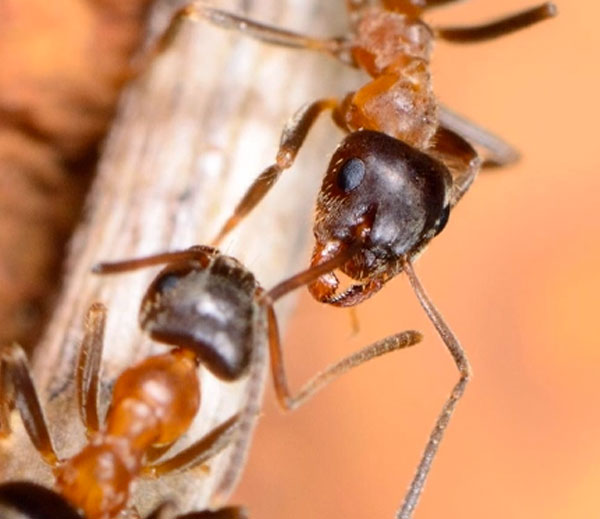
They often establish themselves near trees or plants because they can “farm” aphids to collect the honeydew they secrete. Ants stimulate this secretion using their antennae, which they use to tap the aphids’ abdomens. Ants also protect aphids from predators such as ladybugs.
Diet of the common ant
Common ants feed mainly on insects, but when available they also consume nectar and sweet fruits. On warm days, worker ants move quickly in search of prey or food. They feed primarily on honeydew from aphids and other plant-sucking insects.
More specifically, they consume small live or dead insects such as mosquitoes, gnats, crickets, cockroaches, mealworms, and more. They also feed on substances such as honey (even diluted), sugar and water, very ripe fruit, kitchen leftovers (such as cooked ham, tuna, eggs, chicken), as well as vegetables and protein jellies.