The bread beetle gets its name because many years ago it was commonly found feeding on baked goods. Today, it typically infests all types of stored dry food products, spices, seeds, cereals, and dried plant material.
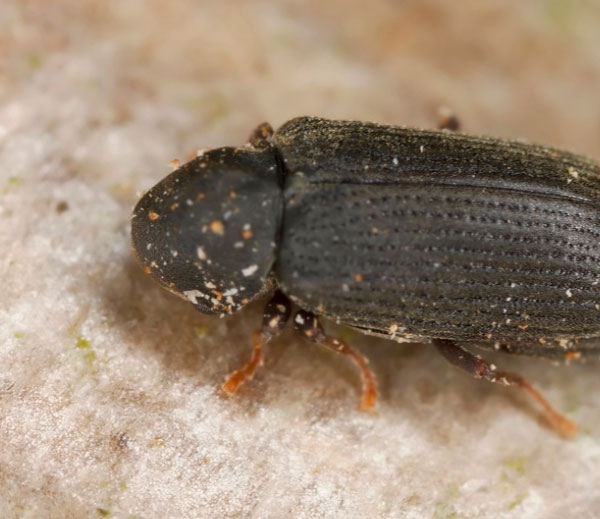
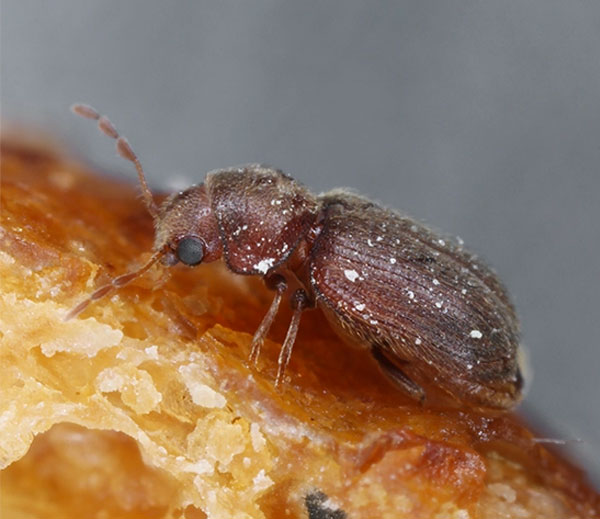
The bread beetle (Stegobium paniceum) is a reddish-brown, oval-shaped beetle. The head and pronotum are bent almost at a right angle to the rest of the body, giving the insect a hunched appearance. The wing covers (elytra) are clearly striated and densely covered with very short, light-colored hairs. This beetle is often confused with the cigarette beetle.
The main difference between the two species is that the bread beetle has a distinct three-segmented antennal club, whereas the cigarette beetle does not have a clearly defined club.
Adult beetles can be observed at various times of the year, often in early summer, and are strong fliers. Fully grown larvae are about 5 mm long, whitish in color, with a head ranging from dark brown to light brown.
Beetle reproduction
Adult beetles live for 2 to 4 weeks, during which females can lay between 20 and 100 eggs. Newly hatched larvae are approximately 0.5 mm long and highly mobile.
The larval stage usually lasts four to five months, but under favorable conditions, development from egg to adult can occur in as little as 6–8 weeks.
Once larvae are fully grown, they pupate and remain in this resting stage for 12–18 days.
Habitat: where they are found
The bread beetle lives inside stored food products and many other items kept in unprotected containers. Kitchens and pantries are primary targets, especially areas with spills and crumbs. They can also survive for weeks without food. If the pests are not completely removed, they are likely to re-emerge from their hiding places and start a new infestation.
Diet of the bread beetle
The bread beetle feeds on starch, dry bread, baked goods, grain, pasta, cereal flours, dried fruit, legumes, spices, as well as tobacco, paper, dried plants, cocoa, tea, and coffee. Since it can also digest keratin, it may damage hair, fur, wool, taxidermy specimens, and artworks containing such materials.