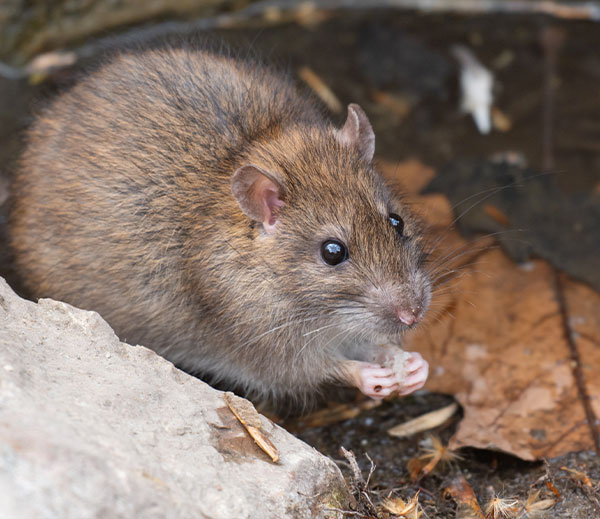
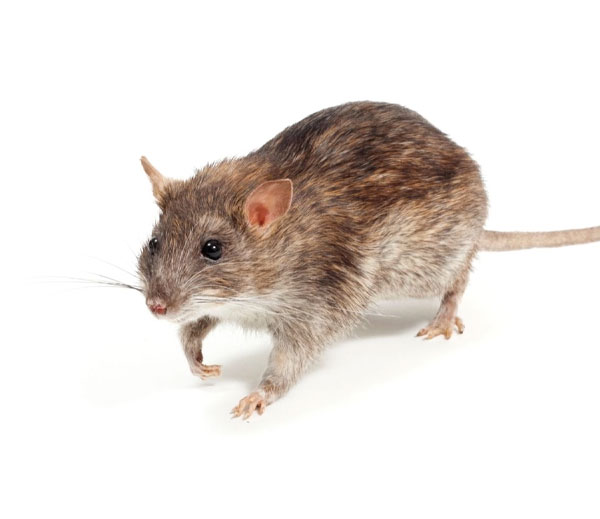
Gray rats can cause damage to any type of food as well as to building structures. In addition, they can transmit diseases such as typhus, bubonic plague, toxoplasmosis, and trichinosis, also through their parasites.
The gray rat has many names. It is often referred to as the gray/brown rat, common rat, sewer rat, Hanover rat, Norwegian rat, brown Norwegian rat, Norway rat, or wharf rat.
Rats have coarse fur that is usually dark gray or brown on the back and light gray or brown on the underside.
The body of these rats can grow up to 25 cm in length. The tail is usually the same length as the body and may be pink or brown, but it is always hairless.
Adult males generally weigh around 500–600 grams, while females weigh 400–500 grams. Very large individuals can reach up to 900 grams. If an animal is larger, it is most likely another type of rodent such as a muskrat, which is often mistaken for the Norway rat.
Rat reproduction
The Norway rat can reproduce year-round if conditions are suitable, and a female can produce up to twelve litters per year.
The gestation period lasts only 21 days, and litters can include up to fourteen pups, although smaller litters are more common.
As a result, rat populations can grow very rapidly. Rats have an estimated life cycle of about three years, but generally live less than one year.
Norway rats live in large hierarchical groups, both in burrows and in underground locations such as sewers and basements.
When food becomes scarce, rats lower in the social hierarchy are the first to die. If a large portion of the rat population is eliminated from an area, the remaining rats will increase their reproductive rate and quickly restore the previous population level.
Habitat: where they are found
Although known as the Norway rat, Rattus norvegicus originates from northern China and spread worldwide through international trade starting in the 18th century.
Today, gray rats are found on all continents except Antarctica.
Originally, this species lived mainly in forests, but it later evolved into a commensal species, preferring to live wherever humans are present.
Rats build their nests in a variety of habitats, ranging from forests and open fields to sewers and buildings.
Brown rats can construct elaborate burrows with chambers used for food storage and reproduction.
Diet of the gray rat
Gray rats are scavengers and can survive on a wide range of food sources. This ability has helped them spread successfully worldwide.
In urban areas, rats feed on food waste but may also become pests by consuming food from cupboards or crops harvested from fields.
Away from urban areas, they eat a variety of plants and any protein source they can obtain.
Rats are known to catch fish and prey on lizards, chicks, and other rodents.