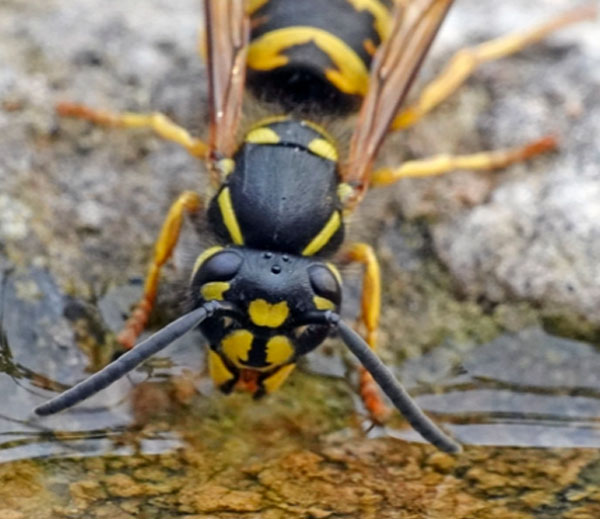
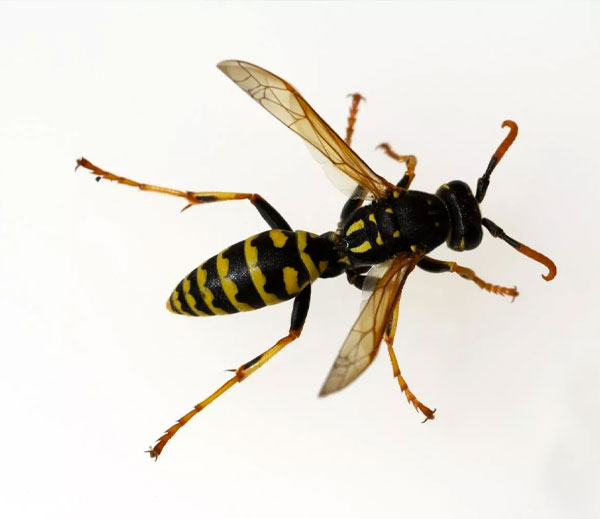
The common wasp (Vespula vulgaris) is found worldwide, including woodlands and urban areas, and is easily recognized by most people.
Adult workers measure 12–17 mm, while the queen is about 20 mm. The iconic black-and-yellow stripes clearly warn other animals that these insects are dangerous. With an abdomen divided into six segments—each with a black/yellow band—the common wasp closely resembles the German wasp (Vespula germanica).
The key difference is that common wasps lack the three black dots on the head and the distinct black markings on the back that merge with the rear stripes. Workers are 12–17 mm long; queens are larger, around 20 mm long.
Reproduction of the common wasp
Mating occurs between young queens and males (drones) inside the nest. At the end of autumn, the nest dies off and the only survivors are the fertilized queens.
Queens find a safe place to overwinter (it is not uncommon to find them in the folds of household curtains). In late spring, the queen emerges from dormancy and begins searching for a suitable nesting site.
Once she finds one, she starts building a small paper nest and begins laying eggs. The eggs hatch into sterile females called workers. These workers then take over nest construction and feeding the larvae, while the queen continues laying eggs.
Toward the end of summer, the queen lays more eggs that produce male wasps (drones) as well as fertile females that will become the queens of future nests. They swarm out of the colony and mate. Males die shortly after mating with the new potential queens, and the life cycle begins again.
Habitat: where they are found
Wasps live in nests built across a wide range of environments. Their habitats can vary depending on their needs.
Wasps are attracted to sweet foods and drinks. Nests are generally built in small entrance holes, usually underground but also in wall voids, ceilings, logs, and trees. Wasps can be seen in early spring, while queens appear as early as February.
Diet of Vespula vulgaris
Wasps tend to be omnivorous. They prefer a diet of nectar, honey, and various invertebrates such as ants, cicadas, butterflies, spiders, caterpillars, and flies.
They also readily feed on food left behind by humans in trash bins.